Why Spring Grass Limits Dairy Performance (and How to Fix It)
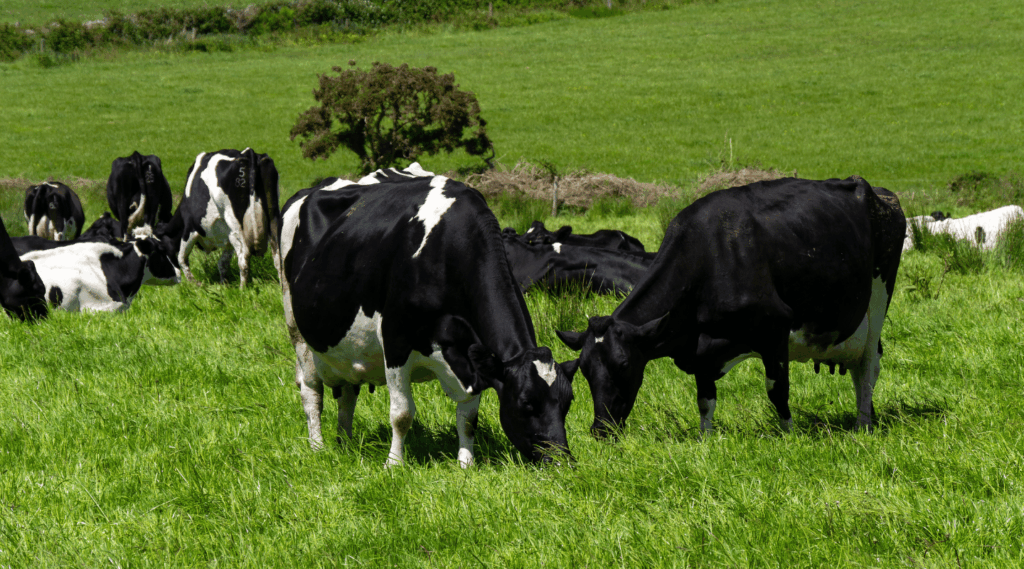
Introduction to Structural Fibre in Grazing Systems: Why Spring Grass Limits Performance and How Engineered Fibre Solves It.
Spring grass is one of the most productive and cost-effective feeds in pasture-based dairy systems, with high digestibility and intake potential driving milk production. However, the low structural fibre content of spring grass can significantly reduce nutrient utilisation, increase nitrogen losses, and reduce milk solids per hectare.
Advances in nutritional modelling and fibre characterisation now offer new insights into optimising pasture diets.
This article explores the limitations of spring grass and how engineered fibre, specifically Nutritionally Improved Straw (NIS), can improve performance and sustainability in grazing systems.
The Challenge with Spring Grass in Grazing Systems
Spring grass is highly digestible but often lacks sufficient structural fibre (uNDF) to regulate rumen function effectively.
- Low uNDF reduces rumen fill
- Passage rate increases
- Fermentation time is reduced
Why Structural Fibre Matters for Rumen Function
Structural fibre plays a key role in regulating rumen passage rate and retention time.
While fresh grass contains fibre, it is often lacking in the structural fibre needed to optimise rumen function. Spring grass is typically low in undigested neutral detergent fibre (uNDF), especially the uNDF30 fraction, which regulates rumen passage rate and retention time. This limitation can lead to reduced rumen fill and increased passage rates, ultimately affecting digestion and nutrient utilisation.
Research from Cornell University shows that the fibre characteristics of pasture change with the seasons, influencing rumen health. Dineen and colleagues found that spring grass has a higher proportion of rapidly digestible NDF and a lower proportion of undigested NDF compared to more mature forages. Spring pasture often contains uNDF concentrations of 9–10% of NDF, whereas later-season grass exceeds 15%. The rapid digestion rate of spring grass increases rumen turnover, boosting intake potential but diminishing the time available for microbial fermentation and physical regulation of passage rate (Dineen et al., 2018; Van Amburgh et al., 2015).
Compared to diets based on conserved forages, rumen passage rate on lush pasture can rise by 30–50%. This shortens fermentation time, reducing fibre digestion and microbial capture of rumen degradable protein, which leads to lower nitrogen utilisation efficiency and greater nitrogen losses.
To maintain rumen health, total dietary uNDF30 should be 8–12% of dry matter, yet spring pasture alone often falls short, especially in early grazing. Adequate uNDF supply stimulates rumination, saliva production, and supports rumen buffering. Insufficient structural fibre increases passage rate and undermines fermentation efficiency.
Nitrogen Utilisation: Where Efficiency Is Lost
Spring grass is rich in rapidly degradable crude protein, However:
- Fast rumen passage limits microbial capture of ammonia
- Excess nitrogen is excreted as urea
- This reduces nitrogen use efficiency and increases emissions
Improving energy and fibre synchrony is critical to:
- Increase microbial protein synthesis
- Reduce nitrogen losses
- Improve overall system efficiency
Nitrogen utilisation is closely linked to rumen stability and efficiency. Spring grass is rich in crude protein, much of which is rapidly degradable. The predominant protein, Rubisco, alongside significant non-protein nitrogen fractions, peptides, and free amino acids, is quickly broken down in the rumen, releasing ammonia. Efficient incorporation of this ammonia into microbial protein depends on the synchrony between fermentable energy supply and rumen residence time. With low uNDF and faster passage rates under spring grazing or on high quality multicut silages, microbial capture of ammonia is limited, leading to increased urea excretion in milk and urine.
This inefficiency is environmentally significant, as urinary urea is quickly converted to ammonia after excretion, increasing emissions and reducing nitrogen use efficiency. Improving synchrony between nitrogen release and fermentable energy supply—such as strategic starch inclusion—and moderating rumen passage rate through adequate structural fibre are vital for maximising microbial protein synthesis and reducing nitrogen losses (Van Soest, 1994; Dewhurst et al., 2009; Sinclair et al., 2014).
In short, without sufficient fibre and energy synchrony, ammonia is not efficiently captured into microbial protein, resulting in higher nitrogen losses and reduced system efficiency.
Milk Fat Depression in Grazing Systems
Milk fat depression is a common issue in grazing systems, influenced by both pasture quality and environmental conditions, and is closely linked to fibre balance.
Spring grass contains high levels of polyunsaturated fatty acids (PUFA), notably α-linolenic acid, which can alter rumen lipid metabolism. High intake of low structural fibre increases passage rate, shifting fermentation patterns and reducing rumen pH. This can disrupt microbial populations and biohydrogenation pathways, favouring the production of fatty acid intermediates such as trans-10, cis-12 CLA, known to inhibit milk fat synthesis.
Supplying adequate structural fibre stabilises rumen fermentation, maintains a favourable acetate:propionate ratio, and supports complete biohydrogenation of unsaturated fatty acids. This reduces the formation of inhibitory intermediates and helps maintain normal milk fat synthesis and overall milk solids output (Bauman and Griinari, 2003).
Beyond the Rumen: Fibre and Hindgut Health
Structural fibre also supports hindgut health and gut integrity. Fibre that escapes rumen digestion provides substrate for hindgut microbiota, which are vital for gut barrier integrity. Inadequate fibre supply can compromise these populations, leading to “leaky gut”, increased inflammation, reduced nutrient absorption, and energy diversion from production.
There is evidence that leaky gut may contribute to elevated milk somatic cell count (SCC) in summer, even without increased clinical mastitis. Thus, maintaining adequate fibre supply is crucial not only for rumen efficiency but also for gut health and overall animal performance.
The Limitation of Traditional Fibre Sources
Supplementing grass or high-quality ryegrass silages presents two main challenges: providing structural fibre without reducing forage intake and supplementing fermentable carbohydrate without causing acidosis. Traditional approaches using straw or combining it with silage can displace high-quality pasture and reduce system efficiency. Buffer feeding spring grazing cows can also limit grazing time and grass utilisation.
Engineered Fibre: The Role of Nutritionally Improved Straw (NIS)
Nutritionally Improved Straw (NIS) provides a consistent, digestible source of structural fibre. Through treatment, NIS improves fibre digestibility and functionality, providing a consistent and effective source of structural fibre for the entire digestive tract. Because NIS can be incorporated into pellets or compound feeds, it delivers fibre without significantly replacing grazed grass, enabling cows to maximise pasture intake while maintaining rumen stability.
- NIS improves fibre digestibility
- NIS supports rumen and whole-tract function
- NIS can be included in compound feeds without reducing pasture intake
- NIS is a practical solution for balancing spring grass diets.
Research shows that NIS allows higher rates of starch feeding, supports greater milk production, and improves milk fat content. Hanlon et al. (2020) found that replacing untreated straw with NIS increased dry matter intake by 1.6 kg/day and milk yield by 1.7 kg/day in lactating cows, with improved milk protein and maintained milk fat percentage. These benefits were observed across both low and high starch feeding regimes, demonstrating that NIS enhances intake, milk component yield, and nutrient utilisation efficiency (Hanlon et al., 2020).
By improving structural fibre supply, NIS moderates passage rate, boosts microbial fermentation, increases nitrogen capture, and supports milk fat production. It also enables nutritionists to safely include more starch in the diet, balancing the highly soluble protein in spring grass.
The improved synchrony of rumen fermentation supports microbial protein production and increases the efficiency of converting forage into milk solids.
Clear performance improvements when using NIS:
- +1.6 kg/day dry matter intake
- +1.7 kg/day milk yield
- Improved milk protein
- Maintained milk fat levels
Improving Sustainability and System Efficiency
Structural fibre should be viewed not as a constraint, but as a key driver of biological efficiency in grazing systems.
For dairy systems focused on sustainability, optimising fibre balance is a significant opportunity. Enhancing rumen function and hindgut health can increase milk solids output per hectare while reducing nitrogen losses and environmental impact. In this context, structural fibre should be seen not as a constraint, but as a key driver of biological efficiency.
Nutritionally Improved Straw (NIS) marks a shift from using straw as a mere filler to delivering engineered fibre designed to optimise rumen and whole-animal performance. By integrating NIS into grazing diets, producers can address the limitations of spring grass, improve animal health and productivity, and move towards more sustainable dairy systems.
Key Takeaways
- Spring grass is highly digestible but low in structural fibre
- Low uNDF increases passage rate and reduces efficiency
- This leads to nitrogen losses and reduced milk solids
- Fibre balance is essential for rumen health and performance
- Nutritionally Improved Straw (NIS) provides an effective, practical solution
- Improving fibre supply can increase intake, milk yield, and sustainability
Conclusion
While spring grass supports high intake, its low structural fibre content can limit rumen function, nitrogen efficiency, and milk fat production.
Nutritionally Improved Straw (NIS) offers a practical solution by delivering effective structural fibre without compromising forage intake. By improving rumen stability and nutrient synchrony, NIS supports better performance, higher milk solids, and more sustainable dairy systems.
If you are looking to improve rumen efficiency, milk solids, and overall system performance in grazing systems, get in touch with the Sundown Products team to learn how Nutritionally Improved Straw can be integrated into your feeding strategy.
References
- Dewhurst, R. J., Delaby, L., Moloney, A., Boland, T. and Lewis, E. (2009). Nutritive value of forage legumes used for grazing and silage. Irish Journal of Agricultural and Food Research , 48, 167–187.
- Dineen, M., Van Amburgh, M. E. and colleagues (2018). Characterization of NDF fractions and digestion kinetics in foCornell University
- Hanlon, M. E., Moorby, J. M., McConochie, H. R. and Foskolos, A. (2020). Effects of addition of nutritionally improved straw in dairy cow diets at 2 starch levels. Journal of Dairy Science , 103(11), 10233–10244.
- Sinclair, L. A., Blake, C. W., Griffin, P. and Jones, G. H. (2014). The partial replacement of soybean meal with rapeseed meal in dairy cow diets: effects on nitrogen utilisation. Journal of Dairy Science , 97, 5266–5277.
- Van Amburgh, M. E. et al. (2015). A 240-hour system for measuring undigested NDF and its role in ration formulation . Cornell University.
- Van Soest, P. J. (1994). Nutritional Ecology of the Ruminant . 2nd ed. Cornell University Press.